

Stop Selling Phones

Let’s be honest: most MSPs are not waking up excited about selling phone systems. Voice earned some of that reputation. For years, the pitch was familiar: here is a new handset, it has more buttons, voicemail goes to email, there is a mobile app and perhaps the customer saves a few dollars a month. The customer politely nods, asks whether the old phones still work and returns to worrying about ransomware, Microsoft licensing, staffing, rising costs and the other 47 things that feel more urgent than replacing a telephone.
That is precisely why MSPs should take another look at voice. The interesting part is no longer the phone. It is the conversation.
Every day, your customers have hundreds or thousands of conversations with the people who determine whether their businesses succeed or fail. People call to buy, complain, cancel, schedule, request service, check an order, praise an employee or explain in remarkable detail exactly what is wrong with the company. Then the call ends, and in most small businesses the information disappears.
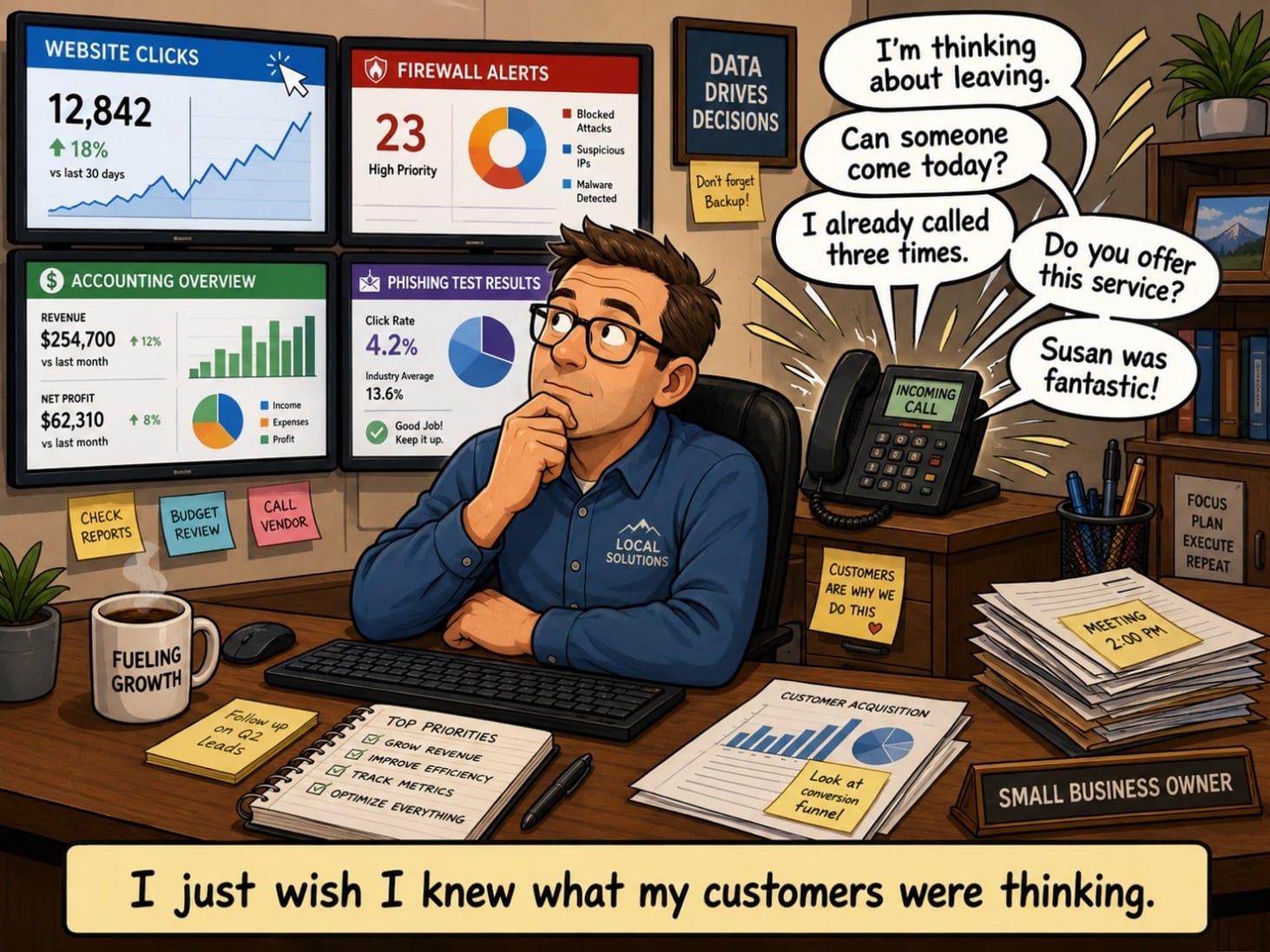
The business may save accounting records for seven years. It may analyze website clicks, firewall alerts, phishing tests and endpoint events. It may know that Larry in accounting has not rebooted his laptop in 19 days. Ask the owner what customers actually said on the phone last week and the answer is often, “I think things are going pretty well.” Excellent. The customer-intelligence strategy is apparently a feeling.
That is the opportunity for the MSP. Through akabis and the white-label OpenCloud Platform—OCP after this point—an MSP can bring customer-experience and conversation-intelligence capabilities to the small and midsized businesses it already serves. These tools once belonged almost exclusively to massive contact centers. Now a 20-person service company can use them without pretending to be Delta Airlines.
The HVAC Company That Thought It Needed More Leads
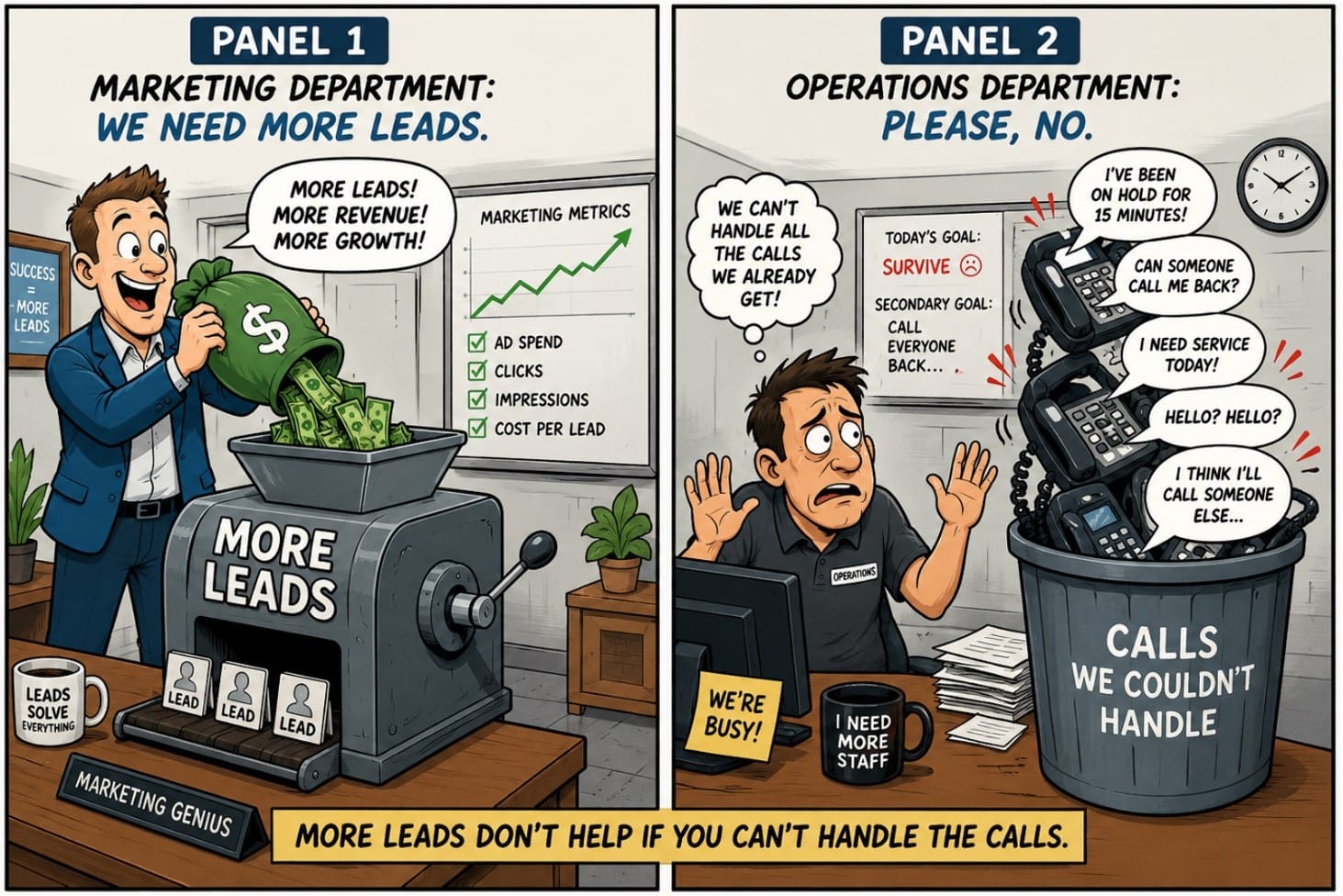
Consider one of your customers: a local HVAC company. Business feels slower than it should, so the owner responds the way many owners do. He spends more on marketing. More Google Ads. More SEO. More lead generation. It is the traditional cure for almost every sales problem.
Not enough revenue? Buy more leads. Sales are down? Buy more leads. The phones are ringing but the business is not growing? Clearly, buy more leads.
Now OCP begins revealing what is actually happening. The phone is ringing. Prospects are calling. The company does not have a lead problem at all. It has a capacity problem.
Again and again, callers ask for same-day emergency service. Again and again, employees tell them the first available appointment is Thursday. The caller says, “Okay, thanks,” hangs up and calls the next HVAC company. In the old world, that was just another completed call. The owner never heard it. The CRM may show nothing. Nobody raises a red flag. The company simply spends another $40 generating a replacement lead for the perfectly good lead it already had.
With call telemetry, recordings, searchable transcripts and conversation intelligence, the pattern becomes visible. How many callers ask for emergency service? How many opportunities are lost because of scheduling? Are calls abandoned during specific times of day? Does sentiment consistently drop when availability is discussed? Are certain neighborhoods, service types or hours producing demand the company cannot fulfill?
Suddenly, the owner may discover he does not need another $5,000 a month in advertising. He needs another technician.
That is not phone-system data. That is a business decision. And the MSP is the partner who brought it to him.
This is why the HVAC story matters. It changes the conversation from technology replacement to business improvement. You are no longer asking whether the customer wants new phones. You are helping the owner decide where to invest money, how to capture revenue already knocking on the door and whether the next hire should be in marketing or operations. That is a much better meeting.
Take These Six Questions Into Your Next Customer Conversation
These are not telecommunications questions. They are business questions—and your sales team can use them word for word:
• Do you know why customers are calling your business?
• Do you know how many callers give up before someone answers?
• Can you identify when a valuable customer relationship is beginning to go bad?
• Do you know which employees consistently create the best customer experience?
• What are customers repeatedly asking for that your business does not currently provide?
• Are you learning anything from the thousands of conversations your company already has every month?
Ask those questions before discussing seats, handsets or porting. They move the conversation from “What does your phone system cost?” to “What is happening inside your customer interactions?” That is where an MSP stops sounding like another telecom reseller and starts sounding like a business advisor.
Enterprise Customer Experience Without the Call Center Costume
Traditional contact-center technology was designed around agents. Small businesses do not have agents. They have Susan.
Susan works the service counter, answers the phone, checks inventory, greets walk-ins, takes payments and occasionally tries to determine why the printer stopped working. The company does not want Susan wearing a headset all day, selecting disposition codes after every call and completing a three-day certification course before she can answer, “Is my lawn mower ready?” It simply wants Susan to do her job.
OCP changes the equation. A regular business user can generate meaningful information around everyday calls without fundamentally changing the way the employee works. The business can see who called, when they called, how long they waited, whether they abandoned and what was actually said. Recordings can produce searchable transcripts. Sentiment can surface conversations that deserve attention. Managers can review calls for coaching and, when appropriate, listen live, whisper private guidance or join the conversation.
The point is not to turn Susan into Agent 437B. It is to help the business learn from Susan’s conversations. Perhaps her calls are short because she is efficient. Perhaps they are short because her customer experience has all the warmth of a parking ticket. Maybe repeated status calls reveal a broken process that could be fixed with proactive text updates. Maybe another employee consistently uses language that calms frustrated customers and should be taught across the team.
Conversation intelligence replaces anecdote with evidence. It gives managers something better than “Susan seems busy” and something more useful than a raw call-detail report nobody reads.
The Customer Who Quietly Warned You
Unhappy customers rarely schedule an exit interview. They do not prepare a PowerPoint explaining where the relationship went wrong. They leave. Sometimes they also leave a one-star review written with the emotional intensity of a closing argument.
A long-term customer may say during a billing call, “I’ve used you for years, but lately it seems like nobody knows what is going on.” That sentence is worth money. It may be the only warning before a decade-long relationship disappears. Did the owner hear it? Did the employee understand its importance? Was it documented anywhere or did the call end with, “Okay, I’ll let accounting know”?
The ability to review conversations, flag negative sentiment and identify recurring themes gives the business a chance to act before frustration becomes cancellation. The customer has already been trying to tell the company something. OCP helps the company hear it.
Why the White-Label Model Matters
The MSP technology stack is crowded. Everyone sells Microsoft 365. Everyone offers endpoint security, backup, firewalls and an RMM platform. Those services matter, but differentiation is getting harder. Voice creates an opening to have a conversation many competitors are not having.
This is where akabis fits. The MSP does not have to refer the customer to a third-party carrier and hope for a commission check. You do not have to introduce another company that owns the contract, controls the billing relationship and becomes increasingly important to your customer.
Through the akabis white-label model, the MSP can bring OCP to market under its own brand: your customer, your contract, your billing relationship, your recurring revenue and your company.
The opportunity is bigger than adding margin to a voice seat. An MSP that manages a firewall can be replaced. An MSP that resells licenses can be replaced. An MSP that helps an owner understand why customers call, where revenue leaks, which relationships are at risk and how employees can improve occupies a different position. You are no longer just maintaining technology. You are helping the customer understand the business.
Stop Selling Phones
The phone itself is not the story. Honestly, it has not been the story for a long time. Phones ring. Congratulations. Alexander Graham Bell had a solid minimum viable product.
The opportunity today is helping a business understand what happens after the phone rings. Who called? Who answered? Who did not? Why did they call? What did they need? How were they treated? Was an opportunity lost? Is a valuable customer becoming frustrated? Does an employee need coaching? Is the same problem happening again and again?
For MSPs, OCP creates recurring revenue without simply bolting another commodity onto the stack. It opens a new conversation with existing customers, creates a reason to approach prospects and provides insight into a part of the business most owners have never properly measured. Most importantly, through akabis, the MSP does not have to build the platform or surrender the customer.
The little guy has always had the conversations. Now you can give him the intelligence and put your name on it.
Your customers are already having the conversations. The question is whether you're the one turning them into insight.
Bring the six questions above into your next customer meeting, then talk with the akabis partner team about launching OCP under your own brand. One conversation may be enough to uncover the first opportunity already hiding inside your customer base.